Multi-lender septic and well financing for contractors.
A failed septic system or a well that stops pumping is a bill few homeowners saved for. They apply once, on their own phone and under your name; participating lenders take it in turn, and Ottri never bills you.
Tanks, drain fields, mounds, wells, pumps.
Check public programs first; finance what they don’t cover.
On eligible programs, the lender pays your business.
Your name on it; applications never sold as leads.
No setup fee · No subscription · No minimums to sign up

Banks and Lenders
20
Finance projects up to
$750K
Full credit coverage
300–850
One application. Eligible lenders, considered in sequence.
Ottri is a customer financing platform for septic and well contractors: one branded application for tanks, drain fields, mound and aerobic systems, wells and pumps, which participating lenders consider in turn. Ottri Global LLC is a licensed loan broker (NMLS 2776988), not a lender.
Septic promotions usually cost the contractor. Ottri costs you nothing.
What a septic or well company typically gives up in dealer fees to offer promotional financing, next to what Ottri charges.
−$1,200
A 12-month promo
On a $15,000 septic replacement, one national lender’s 2019 rate sheet set the contractor’s fee at 7.99% of the loan for a 12-month same-as-cash plan, about $1,200, or 13% for 24 months, about $1,950.
$1,500+
A yearly platform fee
Subscription platforms charge $1,500 to $6,000 a year, frozen months included, when few systems go in.
$0
Ottri never charges you
No sign-up charge, no monthly bill and no cut of the system. On eligible programs, the money goes from the lender to your company, not to the homeowner. Some lender promotions come with a fee of their own, and offering one is your choice.
No setup fee · No subscription · No minimums to sign up
Promo costs: one national lender’s 2019 dealer-fee schedule: 7.99% for 12 months same-as-cash, 13% for 24 months. Platform fees: published plan prices, July 2026.
Everything a septic or well contractor needs to offer financing.
Office and dispatch
Jobs run from a pump swap to a mound system that waits on a soil test, a design and a permit. Every application and funding step stays in one place.
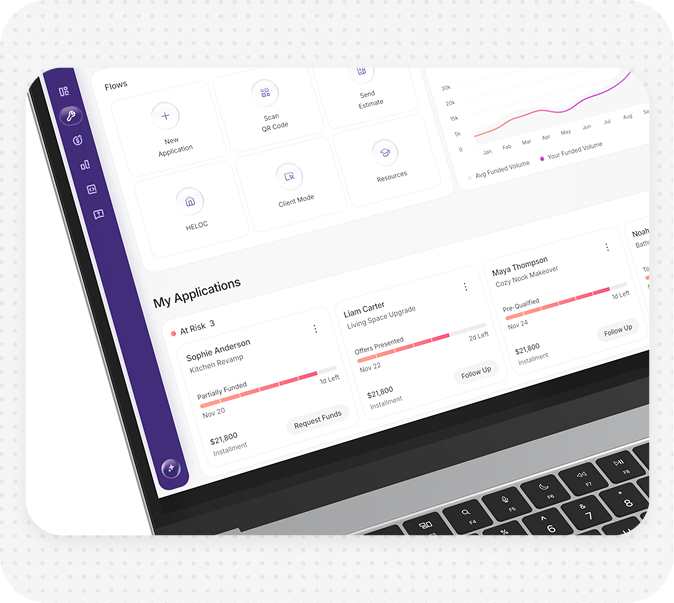
Run financing from one dashboard
Every job’s applications, offers and funding status, from the failed inspection to the county’s final.
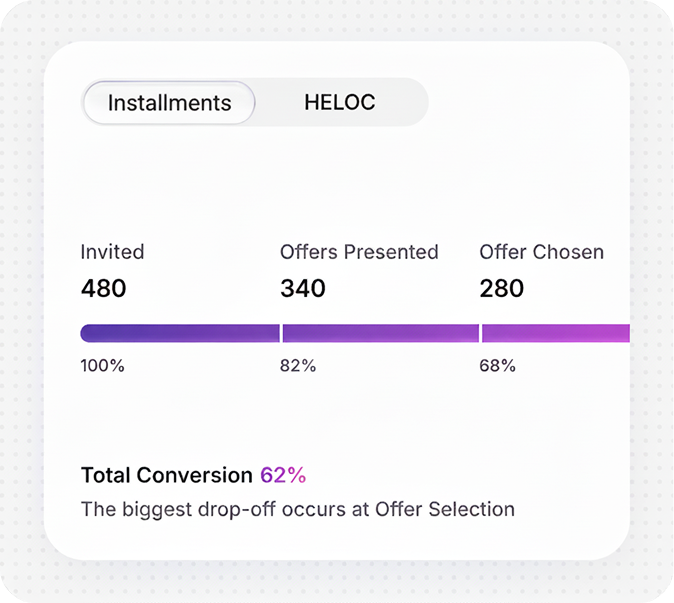
Track every application
Know which homeowners finished applying after the quote and which stopped partway.
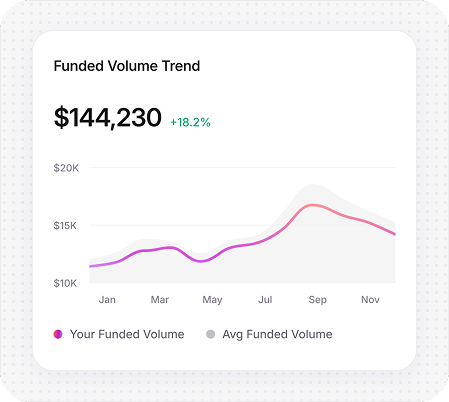
Track funded volume
Track funded systems and wells by crew and month.
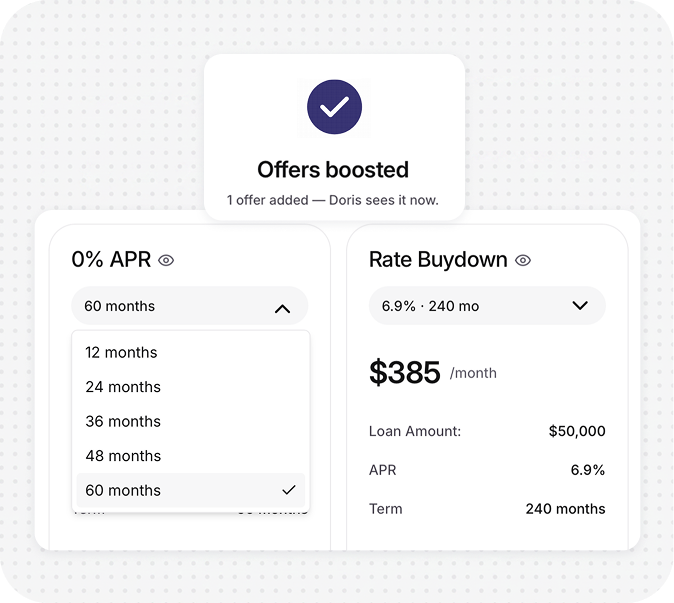
Manage supported promotions
Choose the plans your lender programs offer and see what each costs your business before it goes on a quote.
Techs in the field
Techs send it from the yard after a pump-out or with the replacement quote. Owners see which techs turn service calls into financed systems.
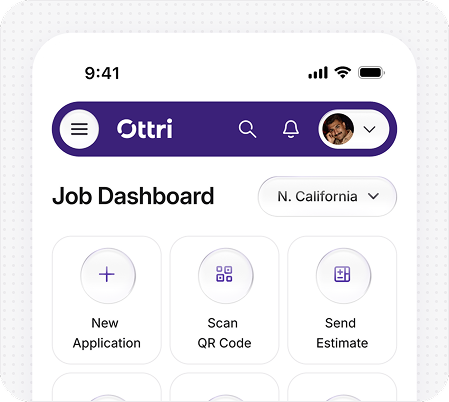
Work from the field
Hand over a link or QR code at the tank lid, or text it with the quote.
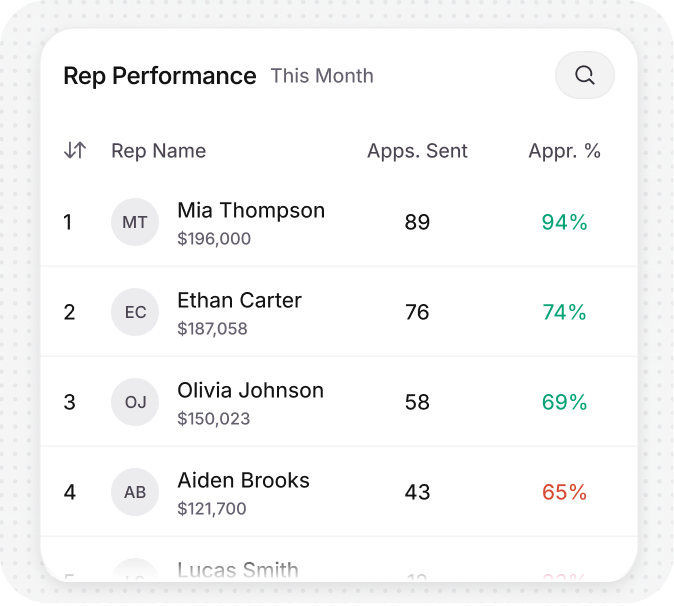
Measure tools and rep adoption
Compare application starts and completions for each tech.
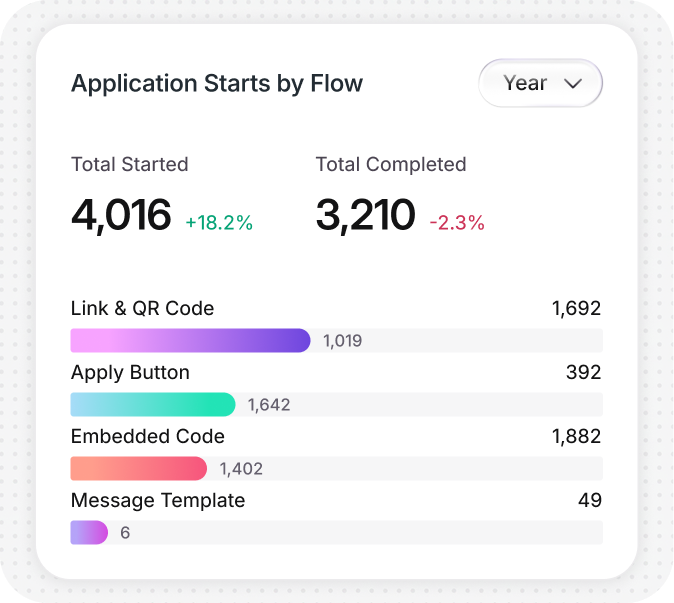
Measure every entry point
See whether applications come from a QR code on the quote, a text message or your website.

Keep the experience branded
Your logo and colors on every application, the same as on your trucks.
With the full quote in hand, homeowners apply under your name on their own phone.

One application, multiple programs
One application covers the tank, field, well or pump; participating lenders look at it in turn.

Direct-to-business funding
On eligible programs, the lender sends approved funds to your company.

Links, QR codes, and messages
A QR code on the quote, a link texted after the pump-out, or one in your follow-up email.

Homeowner-friendly experience
The homeowner sees every offer’s terms on their own phone, with time to compare them with any public program.

Your business stays front and center
From the quote to the county’s final inspection, the application carries your company’s name.

Available promotions
If a lender offers a promotion, see what it costs your company before you include it.
See which jobs are waiting and which techs bring in applications.
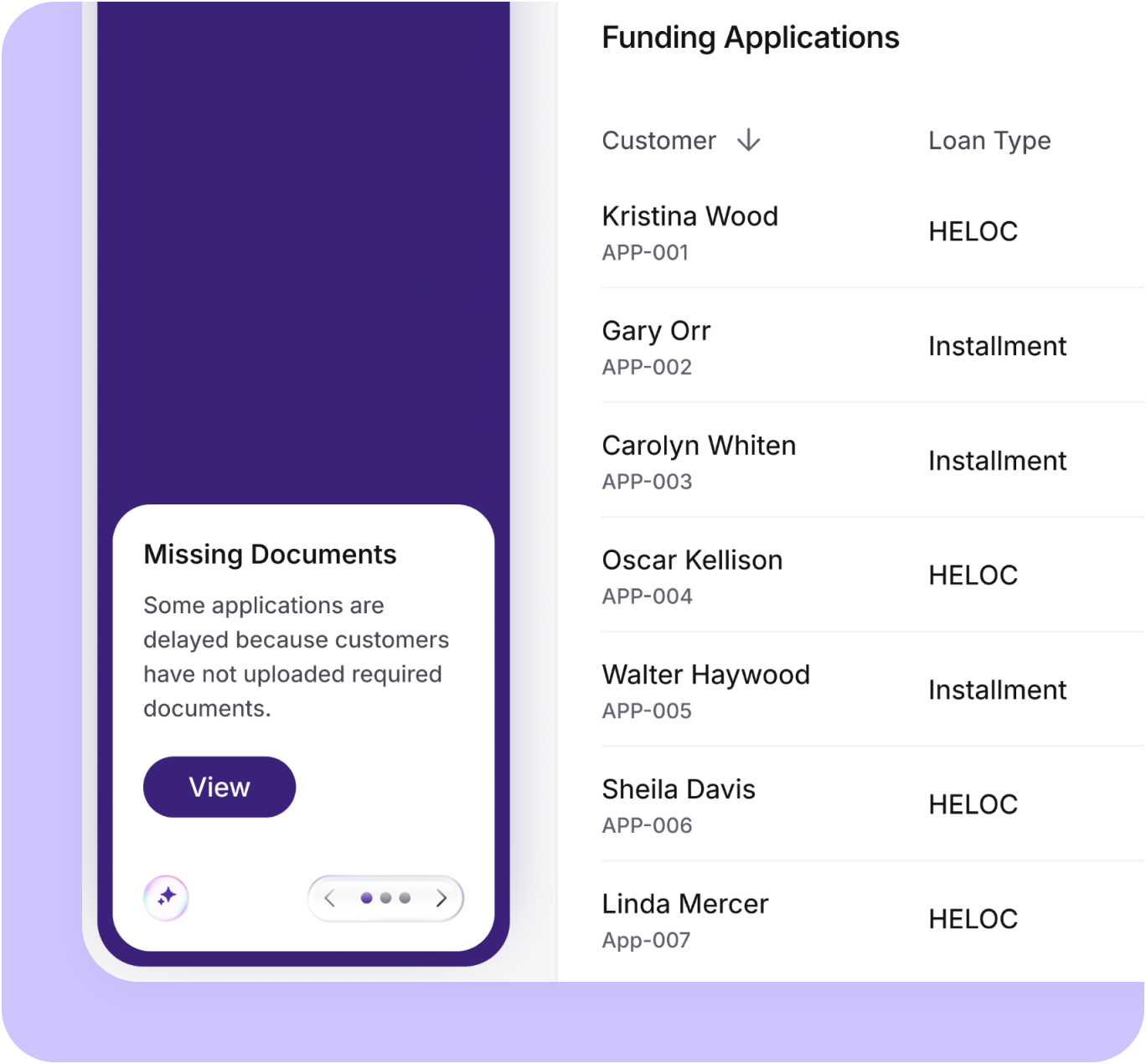
Spot what’s stuck
Find jobs waiting on a document, a permit or the homeowner’s sign-off.
Keep follow-up in one place
Clear the lender’s open items from the application before the excavator is booked.
Keep crews scheduled
Show dispatch which systems have financing in place before tanks are ordered.
See what starts applications
Compare quote QR codes, texted links, website buttons and follow-up emails by the starts they bring.
Compare techs
See which techs’ service calls turn into applications.
Improve distribution
Add the link to the quote, the inspection report email and your website.
One decline shouldn’t stall a system. A 20-lender network can help. All in one place.
With
A disconnected process
The backup pumped, the new system put off.
One lender declines, and the homeowner waits.
Carry the payment plan yourself, or say no.
Promotions sold without the terms.
A tank on order before the 3 days are up.
With Ottri
The full replacement on one application.
The next eligible lender sees the same application.
The homeowner repays the lender, not your company.
Every term shown on the homeowner’s phone first.
Order the tank once the cancellation window closes.
What septic and well companies ask before they offer financing.
Updated

Inspected before the sale closes
What happens when a septic system fails inspection at a home sale?
The buyer and seller negotiate who pays, and whoever owns the home when the work is done applies, on their own phone. Massachusetts requires an inspection within 2 years before a sale and an upgrade within 2 years of a failure, and Washington adds statewide inspections at sale on February 1, 2027. Lenders fund on their own conditions, not on a closing date.
- Massachusetts allows the inspection up to 6 months after closing if weather prevents it.
- Minnesota requires a written septic disclosure before the buyer signs.
- Wisconsin counties such as Manitowoc require their own inspection at transfer.
- A Title 5 report can be 3 years old with yearly pumping records, and a refinance isn’t a transfer.
Sources: Massachusetts Title 5, 310 CMR 15.301 and 15.305; Washington WAC 246-272A-0270 (transfer inspections from February 1, 2027); Minnesota Statutes §115.55; Manitowoc County, Wisconsin, sanitary maintenance program.
Mound system replacement
Example$26,000
- Public grant$10,000
- From savings$3,000
- Balance due$13,000
- Left to pay$13,000
Amount to finance
$13,000
If the grant allows other funding
Should the homeowner try USDA or a state program first?
Check them first. USDA’s Section 504 lends at 1% for 20 years, up to $40,000, to very-low-income rural owners who can’t get affordable credit elsewhere, and some state programs lend at 0% to 4%. Most set income, location or contractor rules and can take weeks to close. Private financing can cover what a program won’t, or the amount above its cap.
- PENNVEST lends Pennsylvania owners $2,500 to $25,000, with no income limit.
- Michigan’s septic loans, its 1% tier included, require an authorized contractor.
- Some programs won’t fund work already started, so apply before you dig.
Example: a $26,000 mound system with a $10,000 public grant and $3,000 from savings. Each program sets its own rules; Ottri isn’t affiliated with any. Sources: USDA Section 504 home repair loans and grants (October 2026); PENNVEST Homeowner Sewage Program; Michigan EGLE, septic replacement loan program (May 2026); Massachusetts Community Septic Management Program; Florida Statutes §373.469 (2026); Hernando County, Florida, septic upgrade incentive (2026).
Septic and well costs, sources 2025–2026
HomeGuide (2025); This Old House (2026)
| Job | Typical cost | Programs that often fit |
|---|---|---|
| Well pump replacement | $900–$2,500 | CashInstallment |
| Pump, tank and wiring for a new well | $2,200–$7,000 | Installment |
| Drain field replacement | $3,000–$15,000 | Installment |
| Tank and drain field | $4,500–$20,000 | Installment |
| New well, 200 feet | $6,000–$16,000 | Installment |
| Aerobic treatment unit | $20,000–$40,000+ | Installment |
| Mound system | $25,000–$50,000+ | InstallmentHome equity |
What does a septic system or well cost in 2026?
It depends on what the quote covers. A drain field alone runs about $3,000 to $15,000 and a tank with a new field $4,500 to $20,000, while complete aerobic and mound systems run $20,000 to $50,000 or more. Wells run $30 to $80 a foot complete, and some guides leave out the drain field or the pump.
- Michigan’s public septic loans averaged about $16,900 in their first two years.
- Producer prices rose 10.5% for precast concrete and 13.2% for steel pipe in a year.
- A mound bed alone runs $10,000–$20,000; the whole system, $25,000–$50,000+.
Sources: HomeGuide, septic system cost (September 2025); HomeGuide, drain field replacement cost (December 2025); HomeGuide, well drilling cost (July 2025); This Old House, well pump cost (March 2026); Michigan EGLE (May 2026); Bureau of Labor Statistics Producer Price Index, September 2026: precast concrete products, steel pipe and tube (series WPU101706); well setbacks: 310 CMR 15.211, Minnesota Rules 4725.4450, Florida Administrative Code 62-6.005.
Dana Whitfield
Example: drain field replacement after a backup
Pumped, service restored
Your crew
Permit and application approved
County and lender
New drain field installed
Your crew
County final, homeowner confirms
Health department, homeowner
Paid to your business
Lender, on eligible programs
Next step
Homeowner confirms the new drain field is complete
Does the 3-day cancellation right apply on an emergency septic call?
A new drain field, tank or well sold at the home carries 3 business days to cancel, even when the visit began as a repair call. A waiver takes an emergency the homeowner called you about and a signed, dated statement in their own handwriting; a replacement that waits on a permit rarely qualifies. Restore service first; quote the replacement separately.
- Beyond the down payment, California bars collecting ahead of the work, even from a lender.
- California gives buyers 65 and older 5 business days to cancel instead of 3.
- Most lender programs pay after the job is done; some pay at signing.
- A $900 pump swap is usually cash: network programs start near $1,000, and each lender sets its own floor.
Sources: 16 CFR 429 (FTC Cooling-Off Rule); California Business and Professions Code §7159.5; California Civil Code §1689.6; This Old House, well pump cost (March 2026).
Septic and well financing questions, answered.

How can septic and well contractors offer customer financing?
Bring it up with the quote, next to cash and any public program, then send one application when the system’s design and price are final. Your office or tech sends it under your company’s name, and participating lenders take it in turn. The homeowner repays the lender, which on eligible programs pays you. Ottri charges your business nothing.
Can one application cover the tank, drain field, perc test, permit and excavation?
Put every part on one estimate: perc or soil test, design, permit, excavation, tank, field and yard restoration. The homeowner applies once for the total, within each program’s limits, and each lender confirms which costs it accepts. If the soil test calls for a mound instead, sign a change order and send the lender the new amount to review.
Can a grant and financing pay for the same septic job?
Sometimes, when the program allows other funding and its timing fits. Florida’s upgrade incentive pays the licensed installer up to $10,000, but Hernando County wants anything above its $7,500 cap paid at signing, before most lenders fund. Read each program’s rules on other money and start dates before the homeowner applies, and show the grant as a credit on the contract.
Who applies for financing when the septic fails a home-sale inspection?
Whoever owns the home when the work is done: the seller before closing, or the buyer after it, in their own name and on their own phone. Each lender sets who can apply and when it funds, so never promise money by a closing date. Quote early: soil tests, design and permits can take weeks, and an approval can expire before the install.
What does a new well cost, and what if drilling goes deeper than quoted?
About $30 to $80 a foot complete, or $6,000 to $16,000 for 200 feet, while drilling-only quotes of $20 to $30 a foot leave out the pump, pressure tank and wiring. Quote depth as a range and apply for the likely total; each lender confirms which costs it accepts. If the hole runs deeper, sign a change order and have the lender review the new amount before the pump goes in.
Is Florida banning septic tanks?
No, but the Indian River Lagoon plan areas have a deadline. New systems there have been banned since 2024 where sewer is available, and by July 1, 2030, homes on 10 acres or less with septic must connect to sewer if available or upgrade to a system that removes at least 65% of nitrogen. In spring protection areas without sewer, new systems on lots of an acre or less must meet that standard too.
What happens when the first lender declines a septic replacement?
The same application moves to the next eligible lender, with nothing to fill out again, and the homeowner sees before each step whether it’s a soft or hard credit check. Standards differ by lender, so a second can approve what a first declined. If none approves, point the homeowner to public programs or price the smallest system the site allows.
What do I need to sign up?
Create your account online, then add your EIN and company details, your septic or well license, an insurance certificate, a sample contract, the owner’s ID and your business bank account. Ottri has no minimums to join, and each lender reviews your business against its own standards, such as time in business.
Who approves the financing and sends the funds?
The lender approves, sets the terms and, on eligible programs, pays your company directly, most often after the job is complete; some pay at signing. Ottri Global LLC is a licensed loan broker, NMLS 2776988, and is not a lender.
How far must a new well be from the septic system?
It depends on the state. Massachusetts requires 50 feet from the tank and 100 feet from the leaching field, Minnesota generally 50 feet, and Florida 75 feet from a private drinking-water well. When a lot can’t meet them, a new well location or an engineered system changes the scope and the price, so settle it before the homeowner applies.