Customer financing for electricians.
Financing for your homeowners, not a loan to your company: one branded application on their own phone, reviewed in order by participating lenders. No setup fee or subscription.
Jobs from $1,000: service upgrades, panels and rewires.
For licensed electrical contractors.
Lenders pay your company on eligible programs.
Your name on the application; never sold as a lead.
No setup fee · No subscription · No minimums to sign up

Banks and Lenders
20
Finance projects up to
$750K
Full credit coverage
300–850
One application. Eligible lenders, considered in sequence.
Ottri is a customer financing platform for licensed electrical contractors: one branded application for panels, service upgrades, rewires and EV circuits, which participating lenders consider in turn. Ottri Global LLC is a licensed loan broker (NMLS 2776988), not a lender.
Electrical promotions can cost the contractor. Ottri has no setup or subscription fee.
Promotional plans often carry a fee that comes out of the job’s margin. Here is one published schedule, next to Ottri.
−$680
A 12-month promo
Under a 2019 national lender rate sheet, 12 months of same-as-cash on an $8,500 service upgrade carried a 7.99% dealer fee, about $680; 24 months carried 13%, about $1,100.
$1,500+
A yearly platform fee
Subscription platforms bill $1,500 to $6,000 a year, whether the phones ring or not.
$0
Ottri never charges you
No sign-up fee, no monthly bill and no share of the job. Eligible programs pay your company directly, and a lender promotion with its own fee is yours to offer or skip.
No setup fee · No subscription · No minimums to sign up
Promotion costs come from one 2019 national lender schedule: a dealer fee of 7.99% of the loan for a year of same-as-cash, 13% for two years. Platform fees: published plan prices, July 2026.
Everything an electrical contractor needs to offer financing.
Sales and the office
From a one-day panel swap to a service upgrade waiting on the utility or a week-long rewire, each application sits in one dashboard.
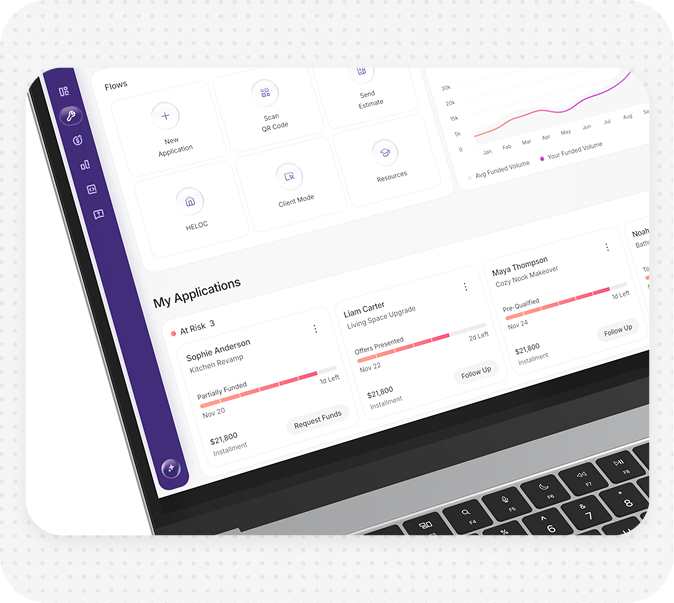
Run financing from one dashboard
Each job’s offers, open items and funding, from the load calculation to the final inspection.
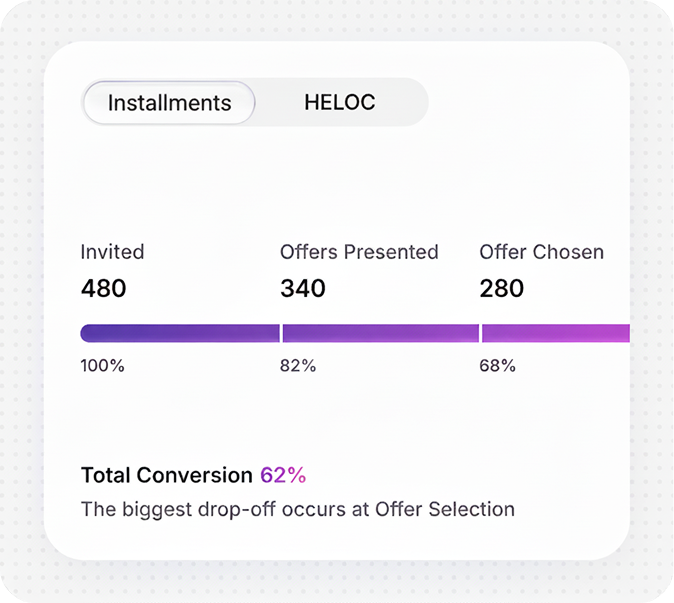
Track every application
Find homeowners who opened an application after the estimate and didn’t send it.
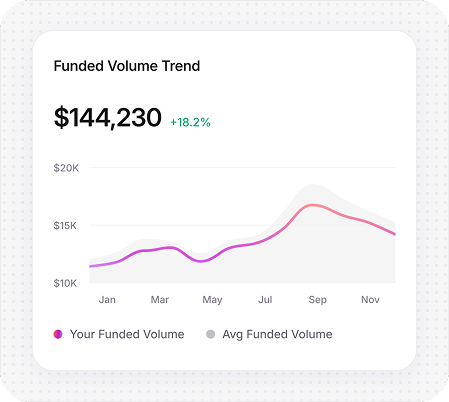
Track funded volume
See funded jobs by electrician, estimator and month.
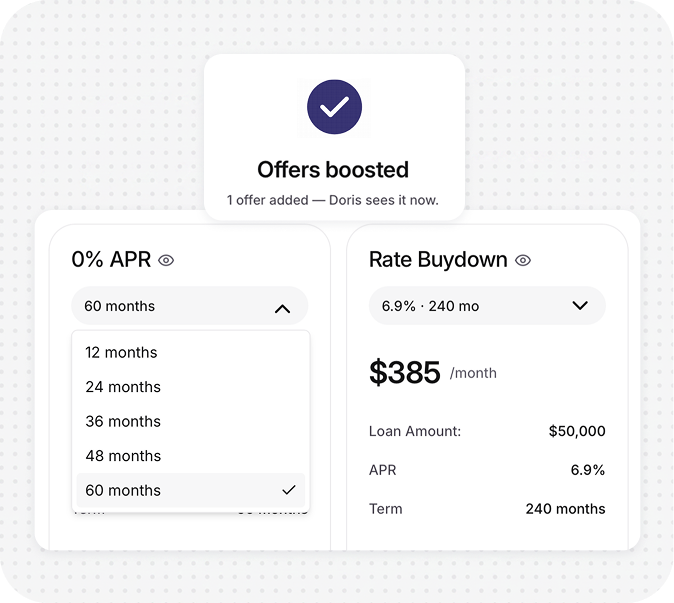
Manage supported promotions
Pick the lender promotions you’ll offer, with each one’s cost to you in view.
Estimates and service calls
Electricians leave the link with the written estimate, and the homeowner applies later. Owners see whose estimates become applications.
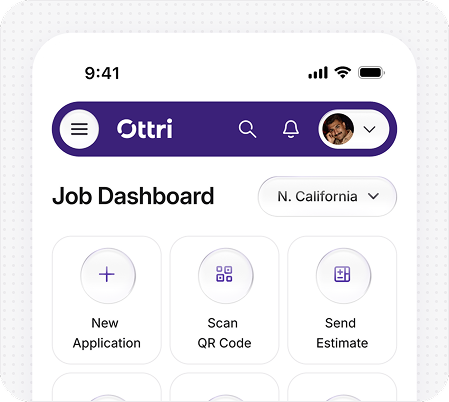
Work from the field
Put a QR code on the estimate, or text the link when the visit ends.
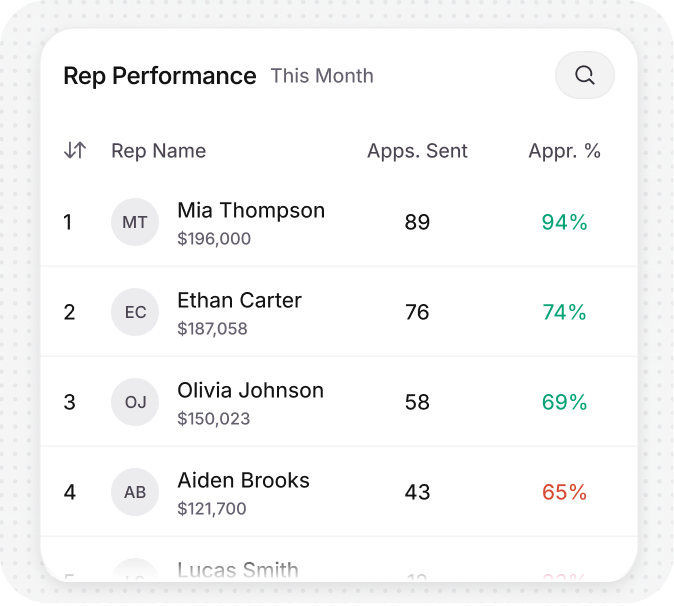
Measure tools and rep adoption
Compare electricians by the applications their estimates start.
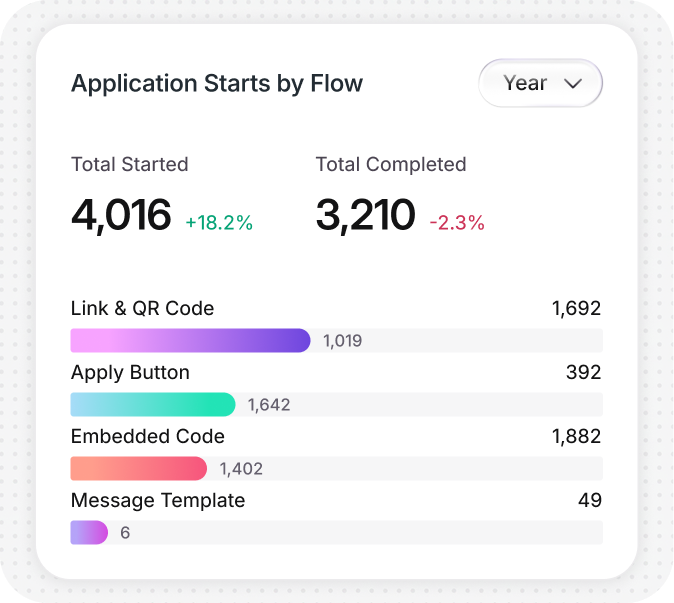
Measure every entry point
Find out whether homeowners begin from a QR code, a text or your site.
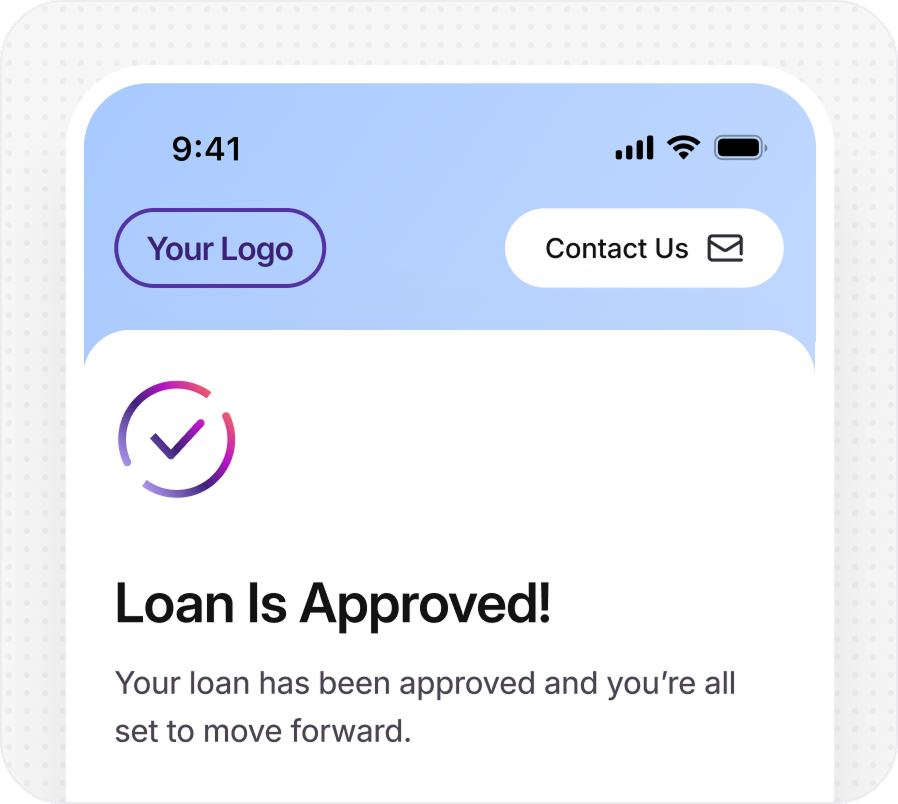
Keep the experience branded
Your company’s name stays on every screen the homeowner sees.
After a written estimate, the homeowner applies from their own phone, on their own time.

One application, multiple programs
The panel, meter base, service and rewiring go on one application participating lenders review in order.

Direct-to-business funding
On eligible programs, the lender pays approved funds straight to your company.

Links, QR codes, and messages
A code printed on the estimate, a texted link, or one in the follow-up email.

Homeowner-friendly experience
Each offer’s terms open on the homeowner’s phone, to read without anyone waiting.

Your business stays front and center
From the estimate to the final inspection, every screen shows your company.

Available promotions
Know what a lender’s promotion would cost you before it appears on an estimate.
Jobs waiting on the utility, and who starts applications.
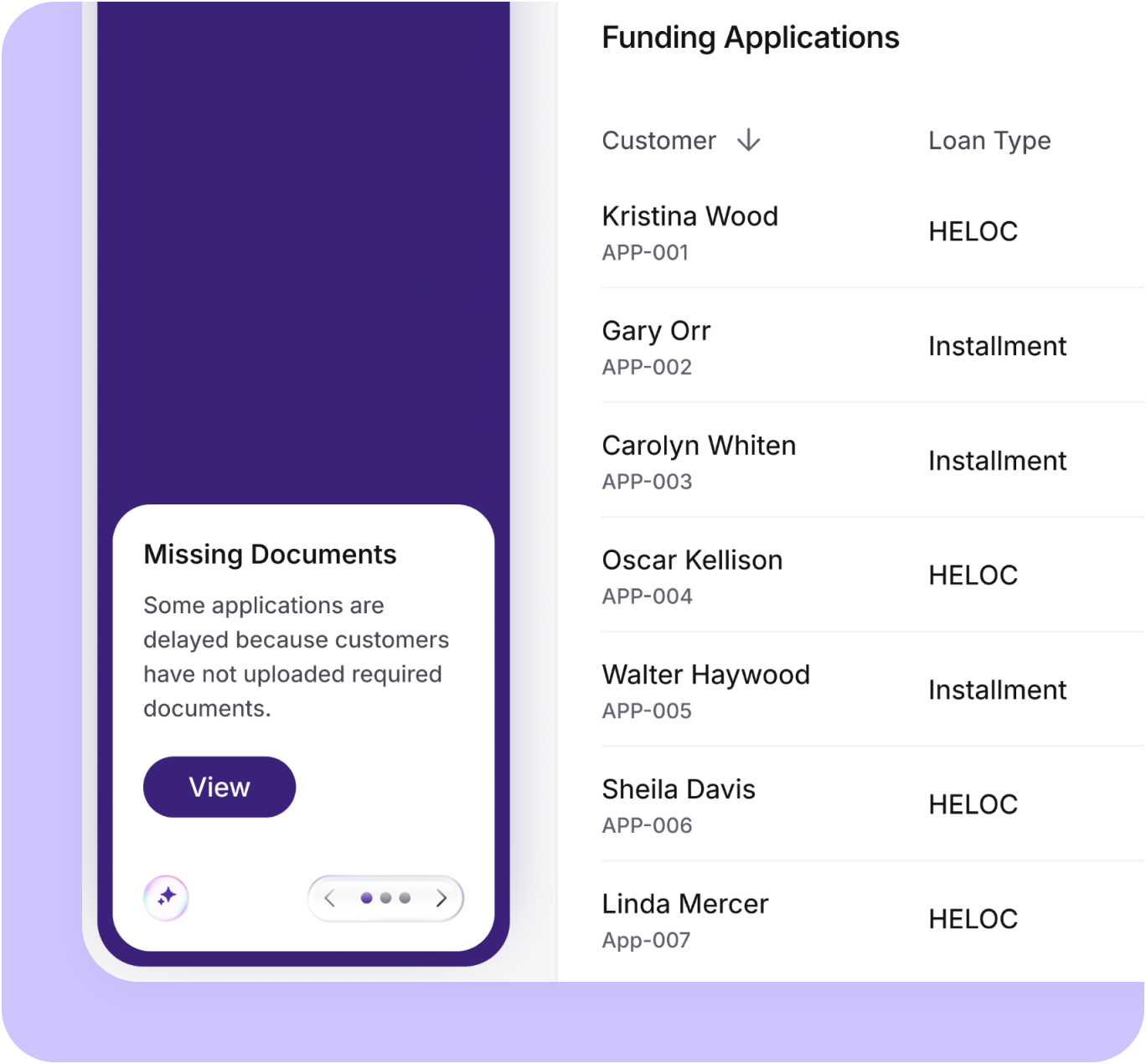
Spot what’s waiting
Surface jobs held up by paperwork, a missing signature or a utility date.
Keep follow-up in one place
Close the lender’s open items before the crew pulls the meter.
Keep crews scheduled
The office sees which jobs have financing set before the disconnect is booked.
See what starts applications
Rank entry points by applications started: estimate QR codes, texts, emails and your site.
Compare electricians
See whose estimates and service calls turn into applications.
Improve distribution
Add the link to estimates, invoices and your panel upgrade page.
One no shouldn’t stall the service upgrade: 20 lenders in the network. All in one place.
With
A disconnected process
Panel, service and rewire on separate plans.
One program declines, and the old panel stays.
A homeowner pushed to sign before the truck leaves.
Promotion costs learned after funding.
Approved, then stuck waiting on the utility.
With Ottri
The whole contracted job on one application.
The next eligible lender reviews the same application.
Terms the homeowner reads later, on their phone.
Each promotion’s cost, shown before you offer it.
Open items, utility dates and funding status together.
What electricians ask before offering financing.
Updated
Paul Jensen
Example: $8,500 service upgrade, 100 A to 200 A
Prime loan
Lender 1
Mid-tier loan
Lender 2
Longer-term installment loan
Lender 3
Offer received
A longer-term loan for the whole service upgrade
Each lender’s terms open on the homeowner’s own phone.
Does every EV charger or heat pump need a bigger service?
No: the load calculation decides. The code gives electricians ways to keep a home on its existing service: EV load management, energy management setpoints, power control systems and a year of measured demand, and the 2026 code counts less general load. Price each new circuit as its own scope, and let the inspector have the final word.
- About 30% of single-family homes have 100 A or less, and 48% of those built before 1980.
- The code minimum for a one-family home is 100 A; 200 A is common, not required.
- Quote EV, heat pump and range circuits on their own lines, each with its load.
Sources: Meier and Gul, panel capacity survey (ACEEE, 2024); Lawrence Berkeley National Laboratory, panel and service upgrade costs (August 2026); City of Denison, TX, 2026 NEC changes (2026); National Electrical Code 625.42, 220.87 (2023 numbering) and Articles 120 and 130 (as adopted locally).
Electrical costs by job, 2025–2026
LBNL (August 2026); This Old House (March 2026); HomeGuide (2025); EnergySage (June 2026)
| Job | Typical cost | Programs that often fit |
|---|---|---|
| Dedicated 240 V circuit | $250–$900 | Cash |
| Level 2 EV install | $800–$3,000 | CashInstallment |
| Panel replacement, median | $3,500 | CashInstallment |
| 100 A to 200 A service | About $4,000–$10,000 | Installment |
| Whole-house rewire | $10,000–$30,000 | Installment |
| Knob-and-tube replacement | $12,000–$35,000 | Installment |
What does electrical work cost in 2026?
It depends on the scope. A 2025 national survey put a single-family panel replacement at a $3,500 median and the customer-side equipment for a bigger service at a $2,800 median, with the utility’s part usually billed on top. Guides put a whole-house rewire at $10,000 to $30,000 and a Level 2 charger install at $800 to $3,000 before the charger.
- A single 240 V circuit runs $250 to $900, below the $1,000 where programs start.
- Few utilities give an allowance; carry the utility’s part as its own line.
- Permit fees ran about $100 for a panel or charger in the national survey.
Sources: Lawrence Berkeley National Laboratory, panel and service upgrade costs (August 2026); This Old House, panel upgrade cost (March 2026); HomeGuide, rewire, knob-and-tube and dedicated circuit costs (2025); EnergySage, EV charger installation (June 2026).

Fuse box out, panel in
How should we talk about knob-and-tube, aluminum wiring and old panels?
With facts, not fear. Some insurers ask about older wiring and certain panels, and a few won’t write a policy until it’s replaced, but the homeowner’s insurer decides. The code doesn’t require removing working knob-and-tube, and the federal safety agency accepts specific pigtail repairs for aluminum branch wiring short of a full rewire.
- The 2026 code requires replacing wiring damaged by fire, water or overheating.
- Don’t call a panel recalled or a fire hazard; let the inspection report speak.
- Whole rewires usually need wall and ceiling patching by other trades; price it.
Sources: CPSC, repairing aluminum wiring (Publication 516, 2011); ABC7 San Francisco, knob-and-tube and insurance (March 2025); City of Denison, TX, 2026 NEC changes (2026; 300.4 damaged conductors); HomeGuide, knob-and-tube replacement (August 2025).
Grace Holloway
Example: 100 A to 200 A service upgrade
Load calculation done
Your electrician
Offer accepted, window passed
Homeowner
Panel, meter base and mast set
Your crew
Utility reconnect and inspection
Utility and inspector
Funded to your company
Lender, on an eligible program
Next step
Homeowner confirms the new service is on
Are there still credits for panels and chargers, and when do we get paid?
The federal credits are over: the panel credit ended for work done after 2025, and the EV charger credit for chargers placed in service after June 30, 2026. Federal panel and wiring rebates reach only income-qualified households where states have launched them. Most programs pay after completion, some at signing; on a service upgrade, completion means the reconnect and inspection.
- Beyond the down payment, California bars collecting ahead of the work, even from a lender.
- Never take a rebate off a financed price or say a job costs nothing.
- A sale at the home carries 3 business days to cancel; 5 for Californians 65 and older.
- Show a same-as-cash plan’s end date and what’s owed if it isn’t paid off.
Sources: IRS, home improvement credit (April 2026) and EV charger credit (May 2026); 42 U.S.C. §18795a (home electrification rebates); NASEO, rebate launch status (September 2026); PG&E, energization timelines (October 2024); 16 CFR 429; California Civil Code §1689.6; California Business and Professions Code §7159.5.
Electrical financing questions, answered.

How can electrical contractors offer customer financing?
Add it to the written estimate as a way to pay alongside cash and card. After the visit the homeowner applies from their own phone, with your company’s name on the application; participating lenders consider it in sequence, and an eligible program pays your company. There’s no setup fee or subscription.
Is this a loan to my business, and who decides on the credit?
No. It is financing for your homeowner’s electrical project, not credit for your company. The homeowner applies to participating lenders, and each lender decides, sets its terms and, on eligible programs, pays your company. You don’t make the credit decision, and you still answer for the work, as on any job.
Is there still a tax credit or rebate for a panel or EV charger?
No federal credit. The panel credit covered work completed through December 31, 2025, and only when the panel supported equipment such as a heat pump; the charger credit ended for chargers placed in service after June 30, 2026. Federal panel and wiring rebates reach only income-qualified households, and only 13 states and DC had launched them by September 30, 2026. Keep both off the estimate.
We already offer financing through our software or network. Why add Ottri?
Keep what you have, and put your Ottri link on the same estimate beside it. Participating lenders take the homeowner’s single branded application one after another, so one decline doesn’t end the job’s financing. There’s no setup fee or subscription.
Who pays the utility’s part of a service upgrade, and how long does it take?
Usually the homeowner; few utilities give an allowance. Most single-family upgrades finish within a month, but utility work can take longer, and California’s utility target for service-line work is an average of 182 days. Carry the utility as an allowance line and don’t promise a date it controls.
What changed in the 2026 electrical code for service work?
The outdoor emergency disconnect moved from 230.85 to 230.70, load calculations moved to Article 120 and energy management to Article 130, outdoor GFCI now covers circuits up to 60 A, including heat pumps, and 30 to 60 A receptacles for EV charging must be listed for that use. Adoption varies by state; Texas began September 1, 2026.
Can a single new circuit be financed?
Usually not. A dedicated 240 V circuit runs $250 to $900, below the $1,000 where network programs start, so card or cash fits better. Financing fits panel and service upgrades, rewires, and charger installs that need panel work.
What happens if the first lender declines?
Nobody retypes it: the application goes to the next eligible lender, and the screen shows before each step whether that lender’s credit check is soft or hard. A smaller approval may still work, and load management instead of a full service upgrade may fit. If none approves, the homeowner can pay another way.
Who approves the financing and pays for the job?
The lender, not Ottri, approves and sets the terms, then pays your company directly on eligible programs. Payment usually follows the homeowner’s confirmation that the job is complete, and some programs pay at signing; on a service upgrade, complete means reconnected and inspected. Ottri Global LLC is a licensed loan broker, NMLS 2776988, and is not a lender.
What does an electrical contractor need to sign up?
Create the account online and add your EIN, company details, the electrical license your state or city requires, proof of insurance, a sample contract, the owner’s ID and a bank account for deposits. Ottri checks each company before switching it on, and lenders then apply their own standards, such as time in business, so a shop in its first years may start with fewer programs.